 Mobilier
 Your order followed and checked on the ground
Between the moment you approve a quote and the moment you open the container, several months go by, on the other side of the world from you. Here is what gets checked during that time, by whom, and when — because a defect spotted in the workshop can be fixed, while a defect discovered on arrival can't.
Drying: the check that happens before the first cut
This is the critical point, and it is invisible in a photo. A piece made from wood that isn't dry enough arrives looking superb — then meets your climate. Heating in winter, air conditioning in summer, mountain air or sea air: the wood loses the moisture it was still holding, shrinks, and cracks. Usually within six months, by which time the seller can no longer be reached.
So our agent checks the wood before production starts: origin, drying time and conditions, condition of the slabs in stock. On solid pieces — suar tabletops, doors, carved headboards — this check decides whether the order goes ahead or waits until a batch is ready. It is also why we prefer workshops that cut their own timber: they control what they sell.
During production: photos of your furniture, not of a catalogue
You receive progress photos as the work moves forward: the wood chosen, the frame assembled, the finish under way. These are your pieces, identifiable, not showroom images. That is what makes it possible to correct what needs correcting along the way — a stain lighter than planned, a proportion to adjust, a joint to rework — while it is still possible and costs nothing.
The full journey of an order, from raw slab to sealed container, is documented in photos here.
The final inspection, piece by piece
Before anything is packed, every piece goes through the hands of our team — including a dedicated quality controller and a carpenter, who looks at a joint with a craftsman's eye, not a salesman's. What is checked:
- Dimensions — height, width, depth, tabletop thickness, compared against the order. Two centimetres off on a table meant to fit between two walls makes it unusable.
- Wood species and appearance — it is the wood that was ordered, with no knot or split in a critical place, and the grain is consistent across a single piece.
- Joinery — tenons, mortises, screws, stability under load. We sit on the chairs, we push the tables.
- Finish — even sanding, uniform colour, no runs, edges eased where they should be.
- Hardware — drawers that slide, doors that close, hinges tightened.
- Consistency across the series — on an order of twenty chairs, all twenty are inspected, not a sample.
If a piece fails
It goes back to the workshop. No haggling, no "you'll hardly notice": a non-compliant piece is reworked or remade before it leaves. That is precisely why an inspection carried out on site and before packing has nothing in common with a complaint sent after delivery — at that stage, sending furniture back to Indonesia makes no economic sense at all.
Packing and loading
Some of the damage found when a container is opened doesn't come from the sea, but from poor bracing. Every piece is protected individually — corners, legs, tabletops, carved parts — then numbered and listed on a packing list. Loading is supervised: heavy pieces at the bottom, nothing rubbing, nothing moving. Full container or shared container depending on your volume: both options are explained here.
Seen from the workshop
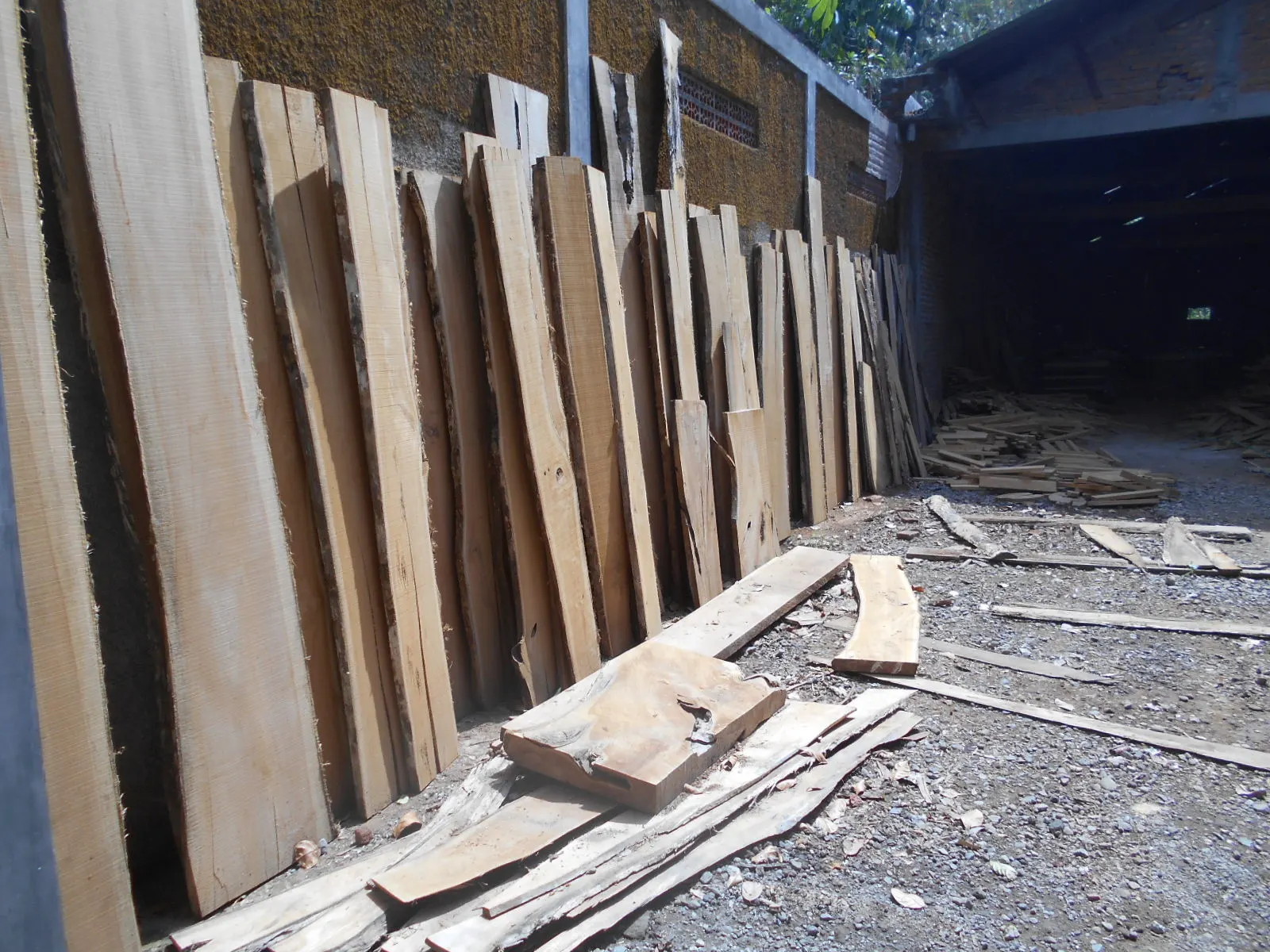
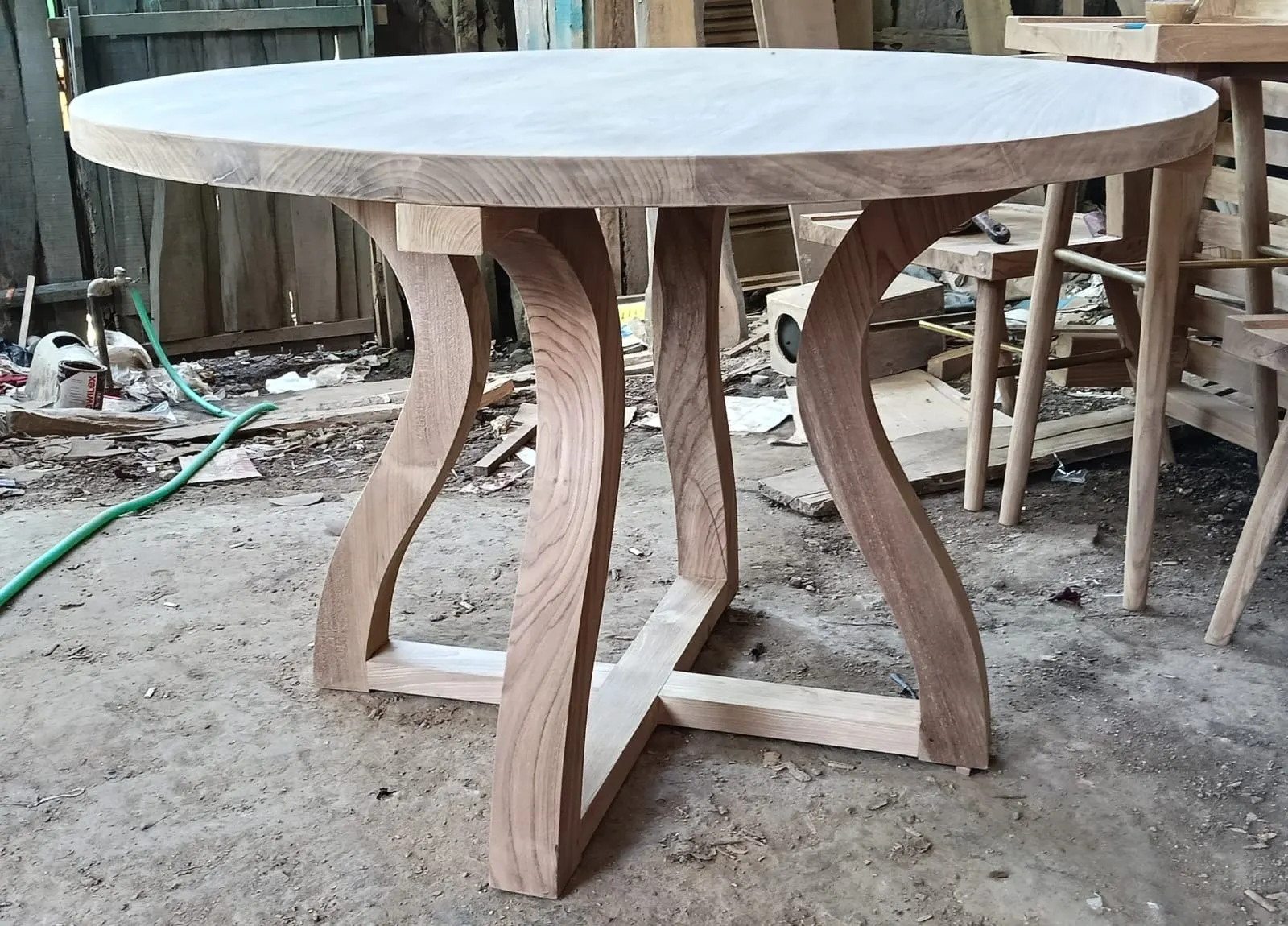
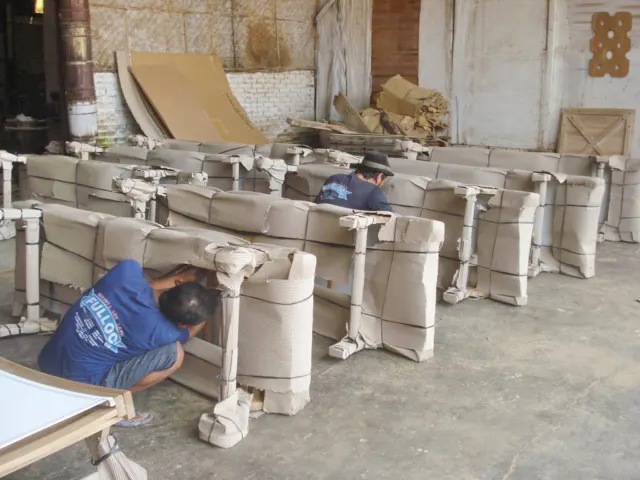
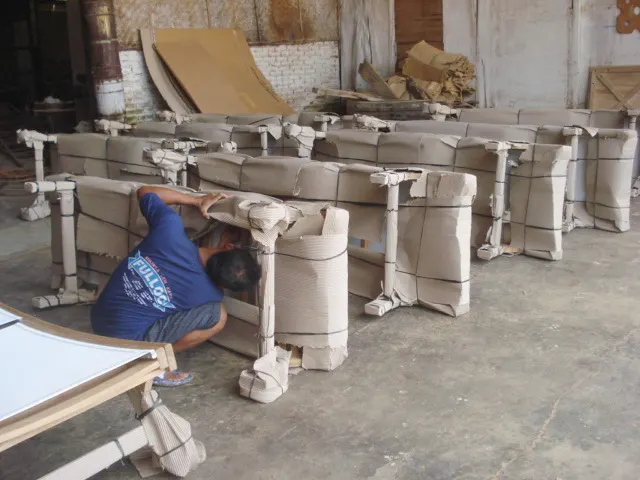
The documents that travel with your furniture
The container travels with its set of export documents — packing list, invoice, transport documents, paperwork on the legality of the timber. Our agent liaises with the freight forwarder so that the file is complete at departure.
Formalities and costs on arrival, however, depend entirely on your destination country or territory and change over time: your customs broker or freight forwarder gives you the up-to-date procedure and the exact amounts. We describe the general principles on the customs and duties page, without ever standing in for them.
Other common questions are answered in the FAQ. For the commercial framework — deposit, payment schedule, commitments — see guarantees and payment, or go back to the 6 steps from the beginning.
Have your order checked on the ground
Describe your project: our agent explains what will be checked on your pieces, and when you will receive the photos.