 Mobilier
 Hand-picked Balinese workshops, not anonymous middlemen
Bali has thousands of workshops. A few are outstanding, many are decent, and some will sell you the work of a neighbour they know nothing about. The whole value of your order lies in that selection — and it is not made from a catalogue.
The real work starts before the first quote
When you describe your project, we don't launch a tender. Reading your request, we already know which workshops can handle it — because our agent has lived in Bali for 40 years and this network was built workshop by workshop, order after order. A maker joins the list once it has been visited, tested on a small run, and has delivered. It leaves at the first slip.
One craft, one workshop
This is the most common misconception among buyers: believing that a "Balinese furniture supplier" makes everything. In reality, the carver who makes a Balinese door is not the cabinetmaker who builds a teak sideboard, who is not the seating workshop able to turn out forty identical chairs for a restaurant, nor the upholsterer who covers a sofa.
A complete project therefore goes to several workshops in parallel, each working on its own craft, and comes together at the end in a single container. It means more coordination — it is also the only way to get the best level on every piece rather than an average level on all of them.
What we look at before placing an order
- Command of the wood — where it comes from, how long it has been drying, how it is stored. A workshop that cuts its own timber controls its drying; a workshop that buys ready-glued panels controls nothing. This is criterion no. 1, because it is defect no. 1 in imported furniture.
- Consistency in series — one beautiful piece proves nothing. We look at a run in progress: do the twenty pieces really match?
- Willingness to correct — every workshop makes mistakes. The good sign is the one that reworks a piece without arguing when it isn't to spec.
- Keeping commitments — a workshop that agrees to every deadline you ask for is a workshop that will meet one in two.
- Packing — a lot of damage comes not from the sea but from poor bracing. A workshop used to exporting packs differently from one that sells to boutiques in Seminyak.
Seen from the workshop
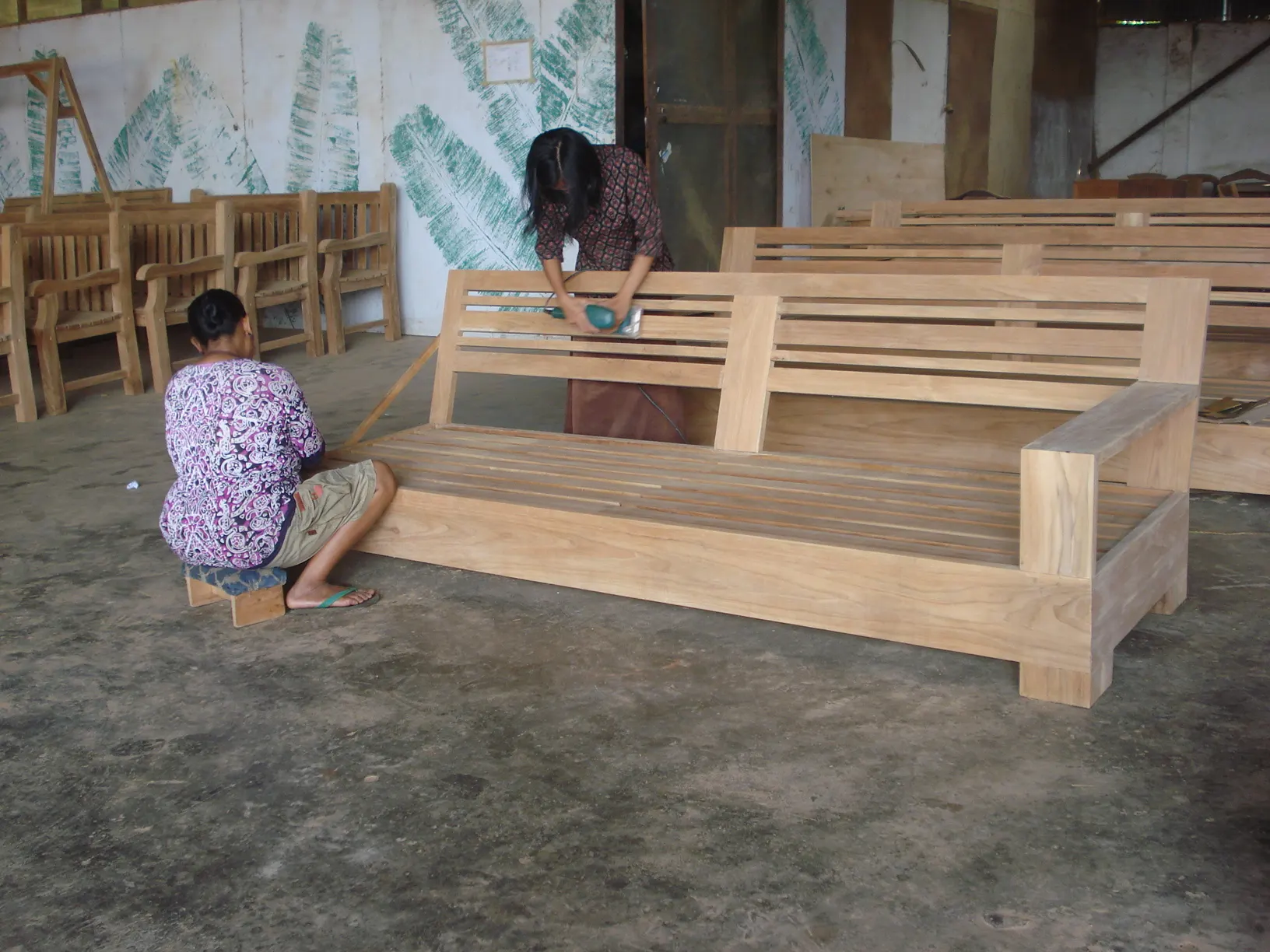
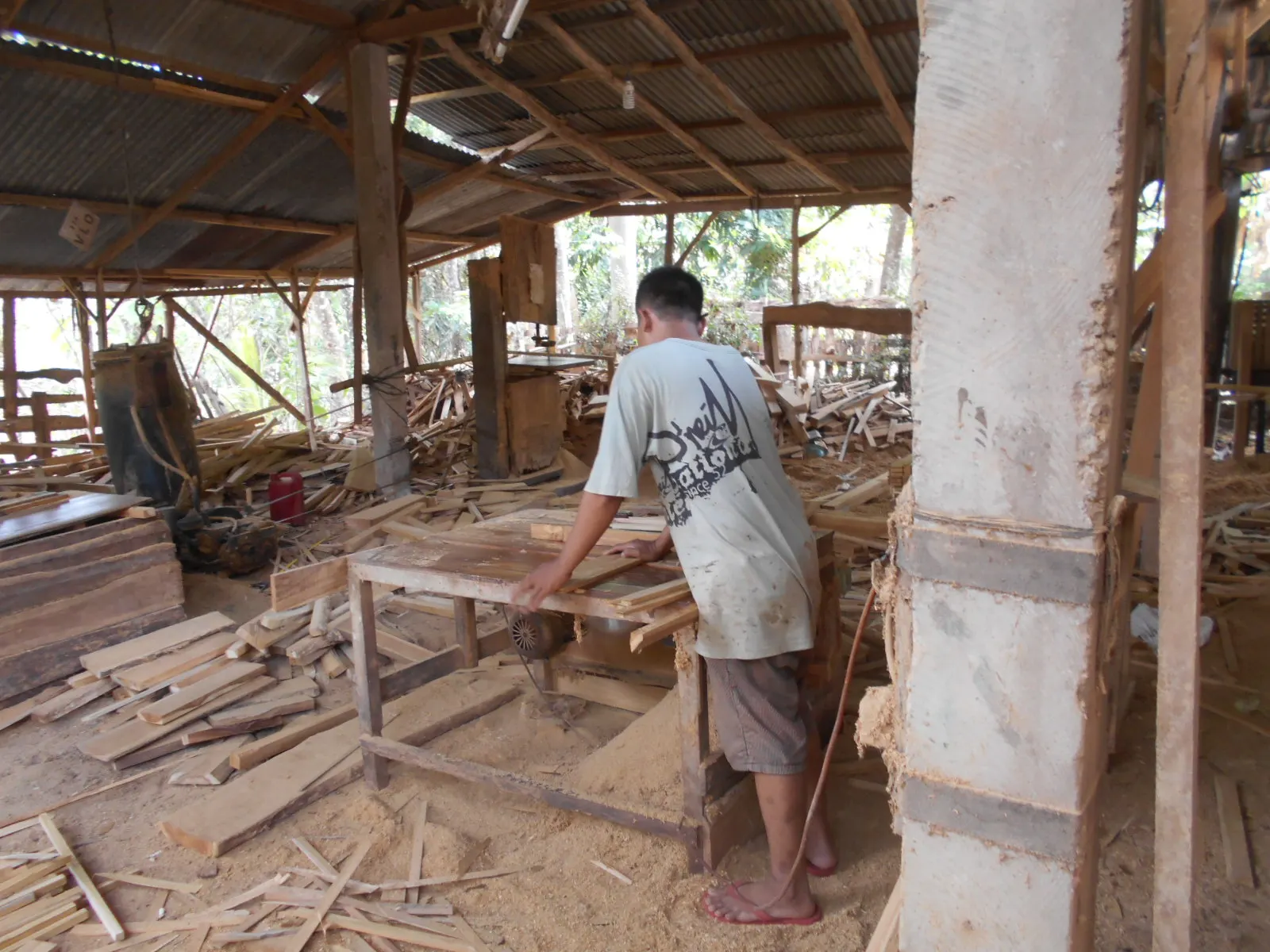
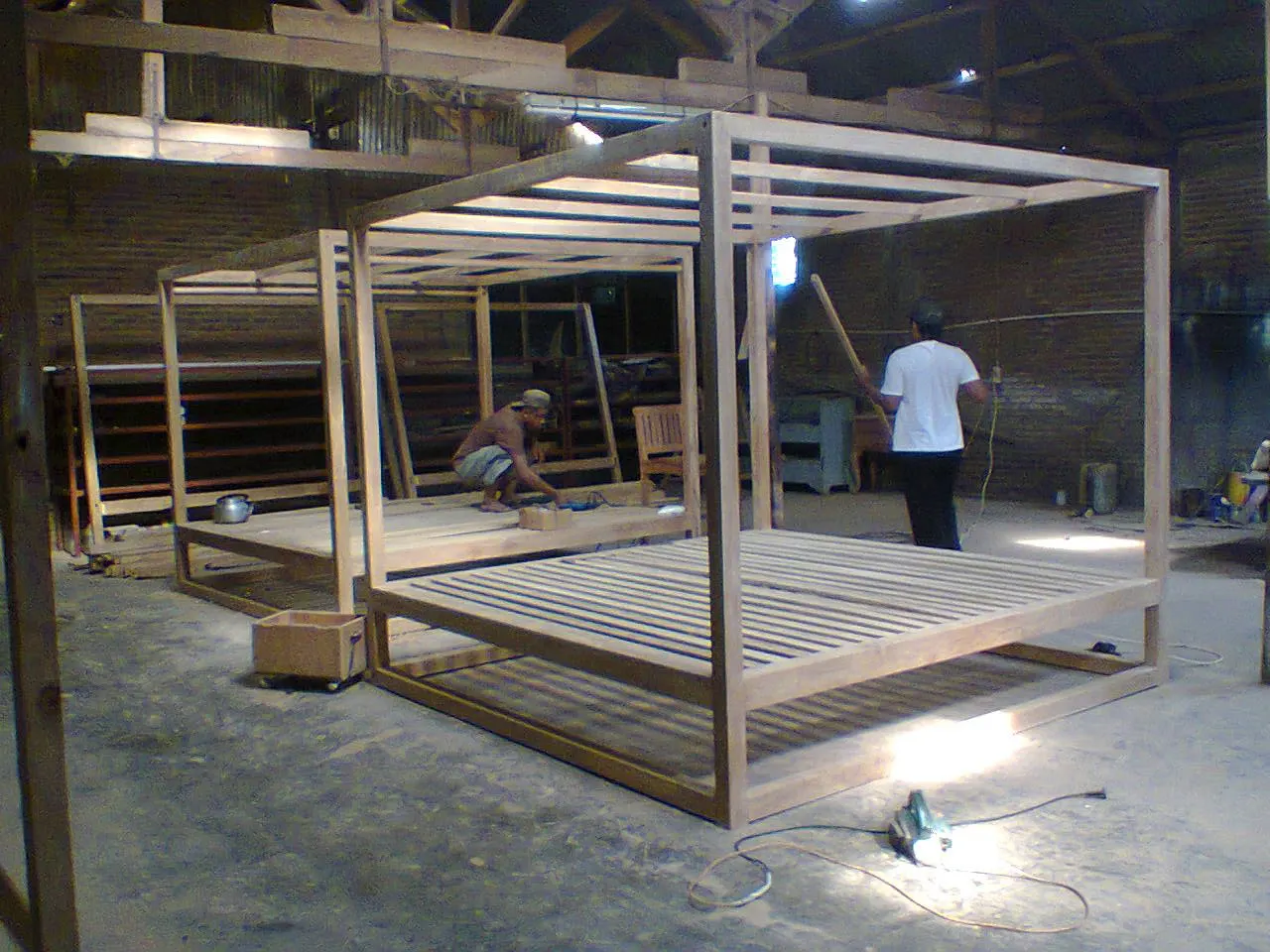
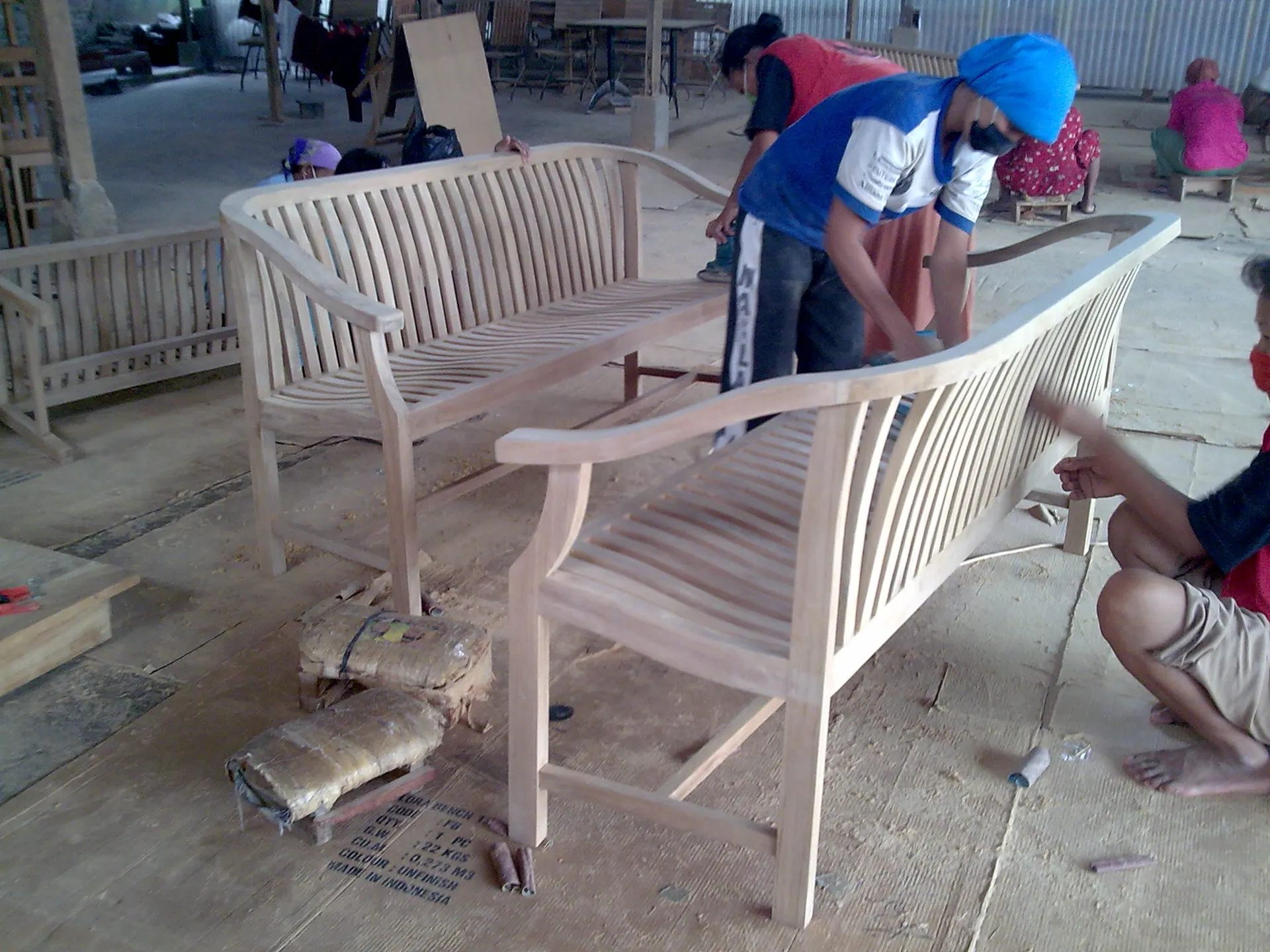
The full journey of a piece of furniture, from raw slab to container, is documented in photos here.
Why we don't publish the names of our workshops
You won't find a list of makers on this site, nor links to them. That isn't secrecy, it is the flip side of selection: this address book is the result of forty years of sorting, and it is exactly what you are paying for. We protect it — just as we protect the prices we have negotiated with them.
On the other hand, nothing about your order is hidden from you: you receive photos of your furniture during production, and our agent tells you frankly what is feasible, what isn't, and why.
What it changes on your quote
A passing buyer pays the visitor rate. A regular client known to the workshop, who orders in Indonesian and pays what was agreed when it was agreed, pays the local price. That difference funds a good part of our service — and it can't be clawed back by negotiating hard by email from the other side of the world.
Next in the journey: quality control and follow-up of your order, then our guarantees and payment terms. You can also go back to the 6 steps from the beginning.
Your project, with the workshop that knows how to make it
Tell us what you are looking for: our agent tells you which kind of workshop will handle it and sends you photos of comparable work.